For much of my adult life, I’ve navigated a fundamental question: How do you build a sustainable existence when your body’s operating system is incompatible with the world’s?
This isn’t about a lack of desire, skill, or work ethic. I have published books, created art, engaged in photography, produced videos, helped lead a support group, and volunteered on non-profit committees. I have worked, consistently. But I have not earned a living. I am now at a point where the financial walls are closing in, and I need to articulate why my path has been so different, and how I can build a future.
This is not a story of professional choice. It is a chronicle of physiological necessity.
A System Built on a Fault Line
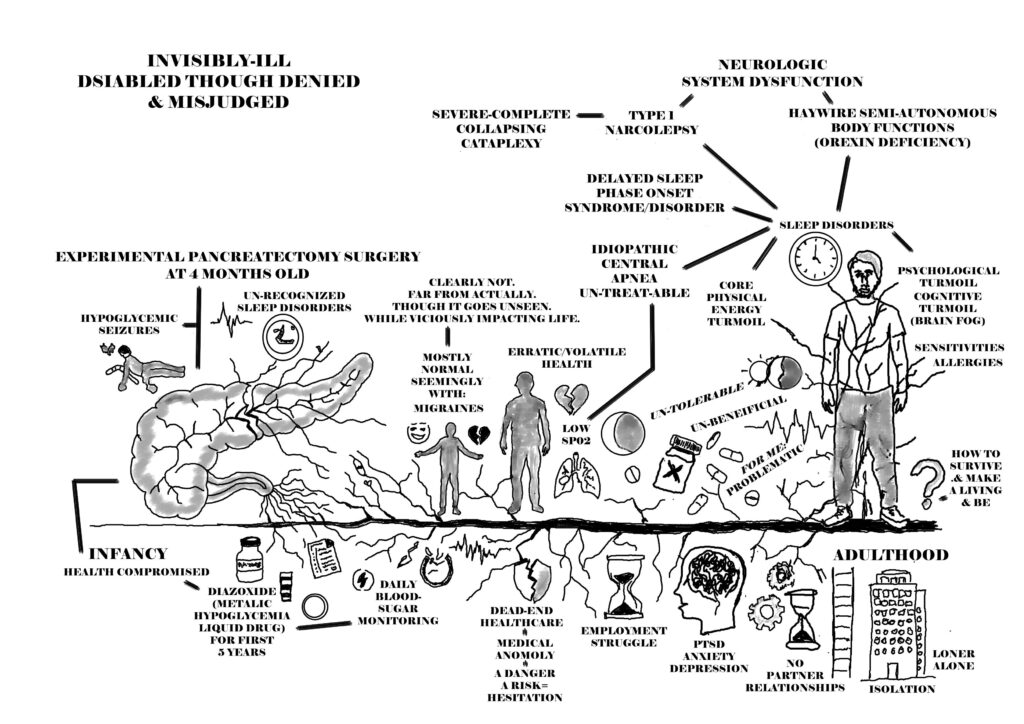
My body’s unique baseline was set in infancy. Following an experimental pancreatectomy to combat severe hypoglycemia, I experienced daily seizures. For the first five years of my life, I was treated with diazoxide, a potent medication used to stop the pancreas from producing insulin. It kept me alive, but it came with its own impacts, including a constant metallic taste that shaped my earliest sensory experiences. My life began with a profound physiological ordeal that fundamentally altered my developing systems. This wasn’t a temporary illness; it was the installation of a different operating system, one that has proven to be highly sensitive and intolerant to many standard medications and interventions ever since.
Click here to view the following, sort of, timeline; image larger.
The Daily Tightrope of Non-Restorative Sleep
Today, that foundation is compounded by a host of invisible disabilities. I live with Type 1 Narcolepsy and a history of severe, complete collapsing Cataplexy – a condition of conscious, emotion-triggered paralysis that is difficult to convey and often avoided in discussion. I also have an untreatable form of Idiopathic Central Sleep Apnea and Delayed Sleep Phase Disorder.
Combined, these conditions make restorative sleep an impossibility. Each night, I spend 7 to 9 hours in bed in a state of vigilance, not rest. I struggle for comfort, for consistent breath, my sleep shattered into fragments of no more than two or three hours of solid continuous sleep, at most once a night. An oximeter on my finger stands guard, ready to vibrate an alarm when my blood oxygen drops, as it does every night.
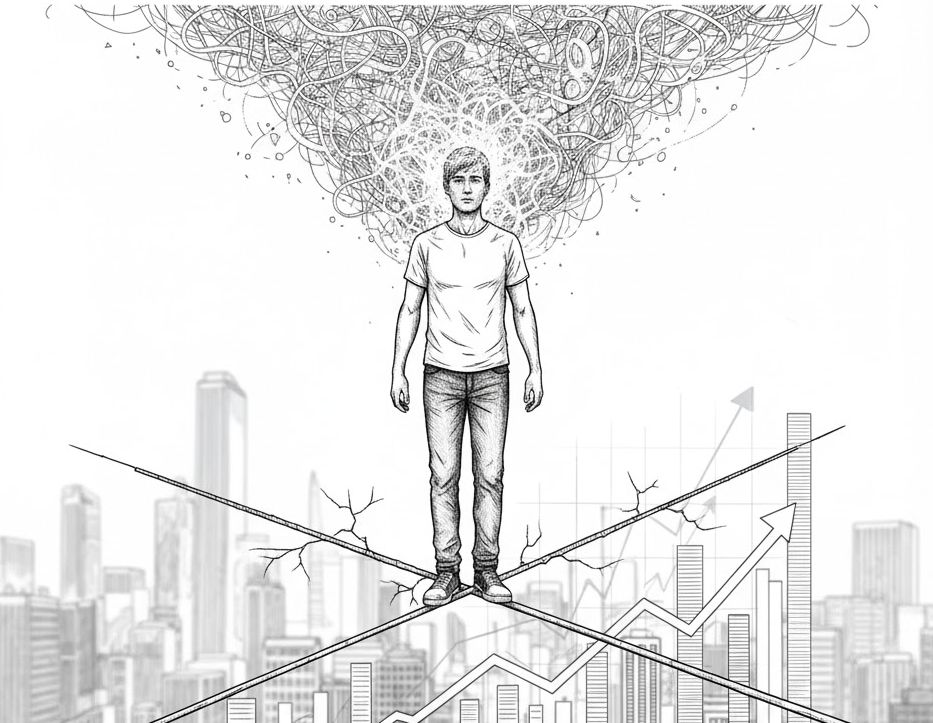
I do not wake up tired; I wake up in a state of continued physiological crisis. Every day is lived on a tightrope, a fine line of managing profound brain fog, physical exhaustion, and the neurological dysregulation that comes from a brain denied its most basic maintenance. Type 1 Narcolepsy in fact is a matter of neurologic system dysfunction due to the deficiency of Orexin/Hypocretin, which functions as the regulator of the neurological orchestra – the neuropeptides, neurotransmitters, and hormones in/of the brain. This is my baseline.
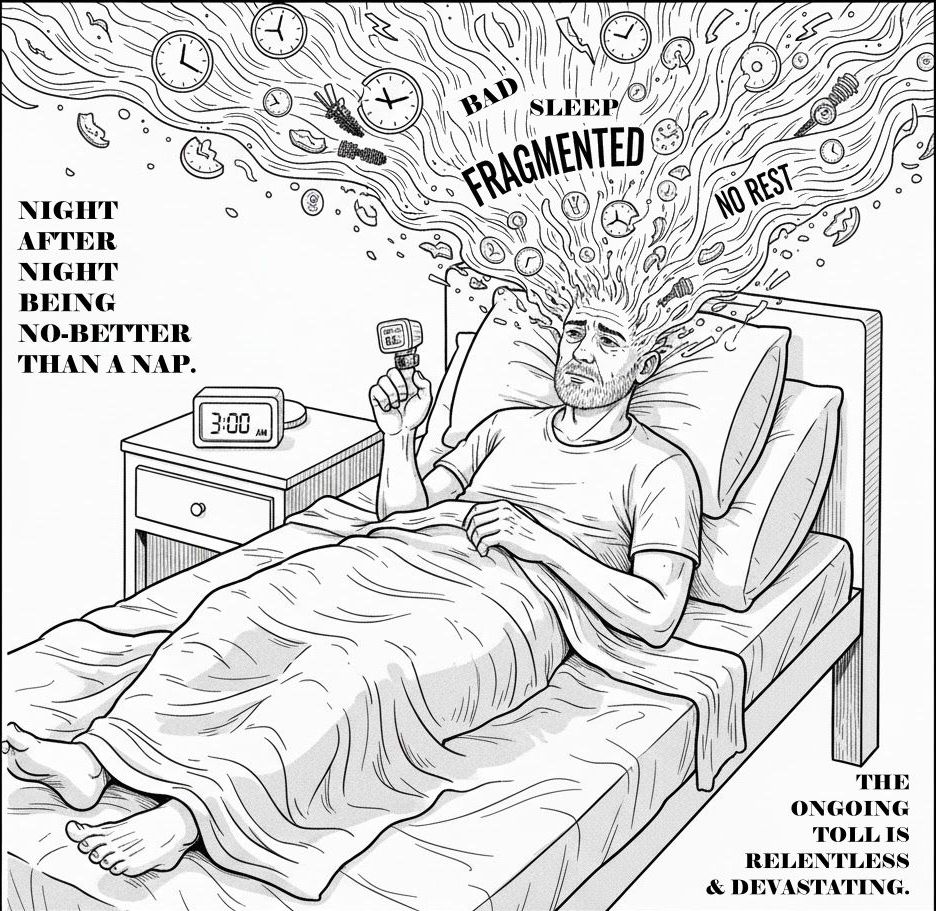
The Collision with a Rigid World
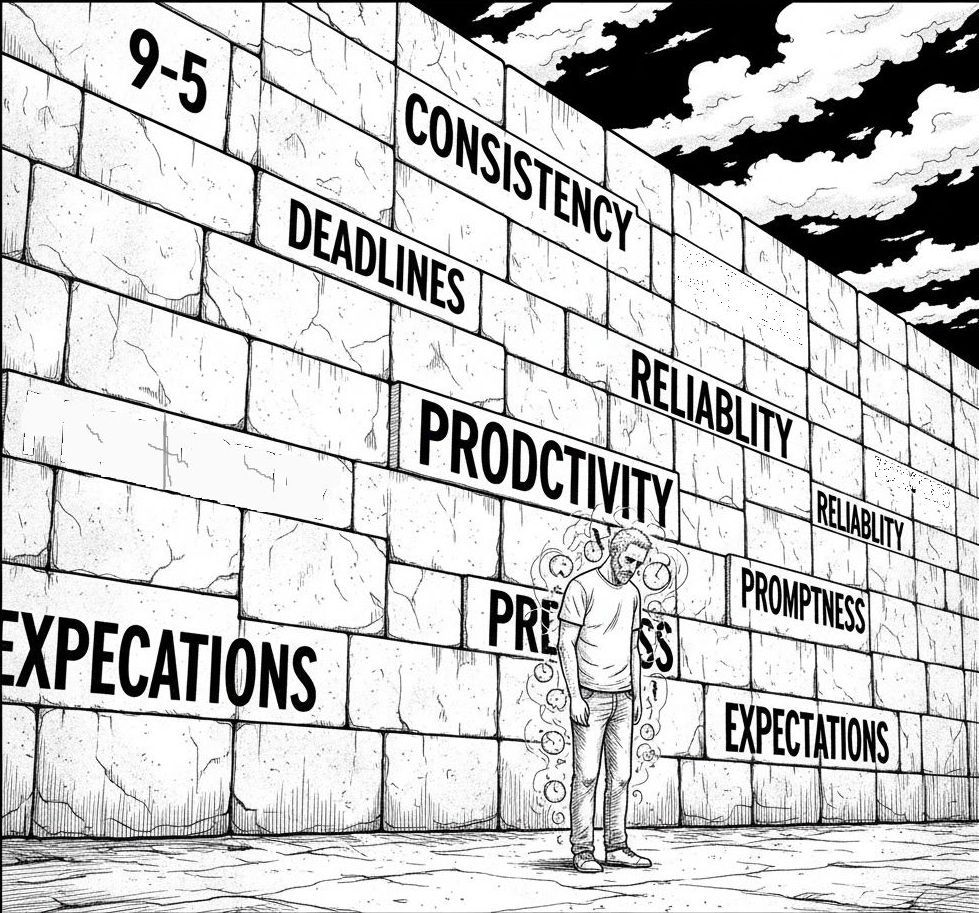
The modern world of work is built on a singular premise: consistency. It demands predictable energy, stable cognitive function, and adherence to a rigid schedule. My reality is the antithesis of this. My ability to function is a fluctuating variable, dictated by the nightly battle for survival.
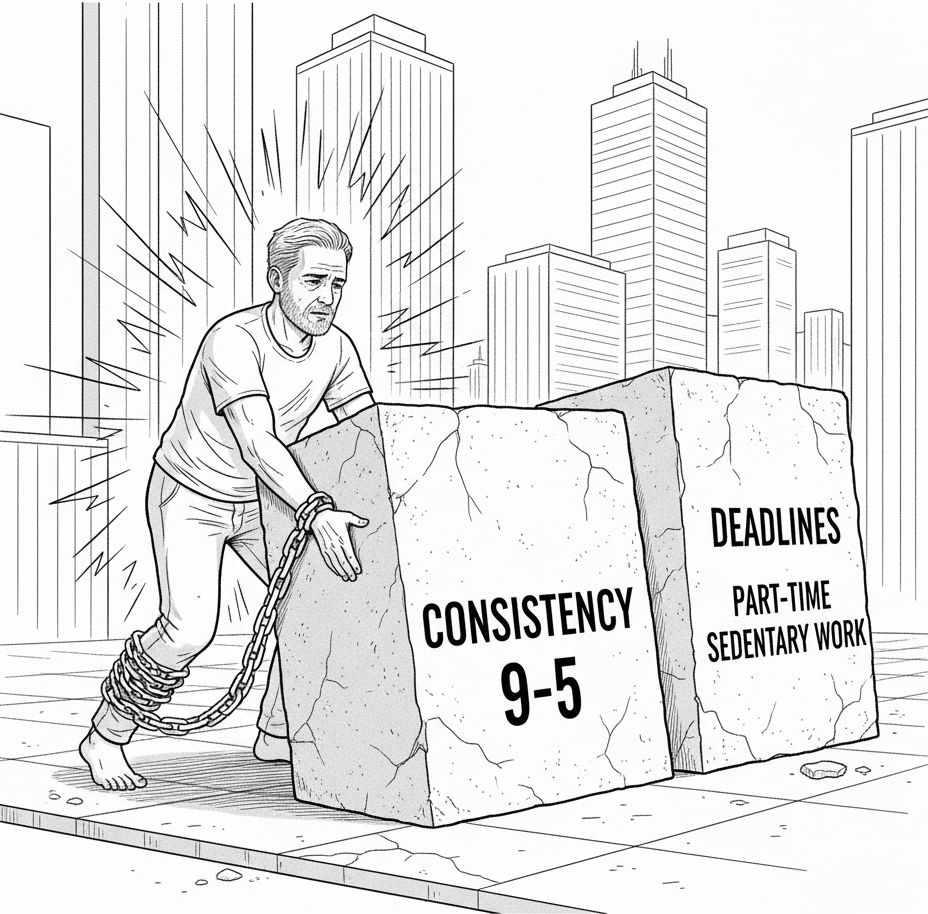
This is why I cannot sustain traditional work. The issue is not the tasks themselves, but the inflexible structure. When I attempted to get disability benefits years ago, I was denied. The rationale was that I could perform “part-time sedentary work.” This conclusion saw a body that could physically sit in a chair, but it was blind to the neurological reality. It failed to comprehend that the brain fog, the sudden sleep attacks, and the sheer effort of maintaining consciousness make the consistent output required for even sedentary work an impossibility.
The dismissal is not just systemic; it is social. When I try to explain my struggle, I am met with platitudes: “Everyone is tired,” “Everyone is stressed.” This response, however well-intentioned, is a harsh invalidation. It equates the profound, cellular-level exhaustion of a neurological disorder with the common fatigue of a healthy person. People rarely begin to get it and often judge harshly. My inability to work a 9-to-5 is not a preference; it is a matter of self-preservation. Pushing my system to conform to an incompatible structure leads to collapse. My health has always been erratic and volatile, unpredictable.
The Value of a Lived Expertise
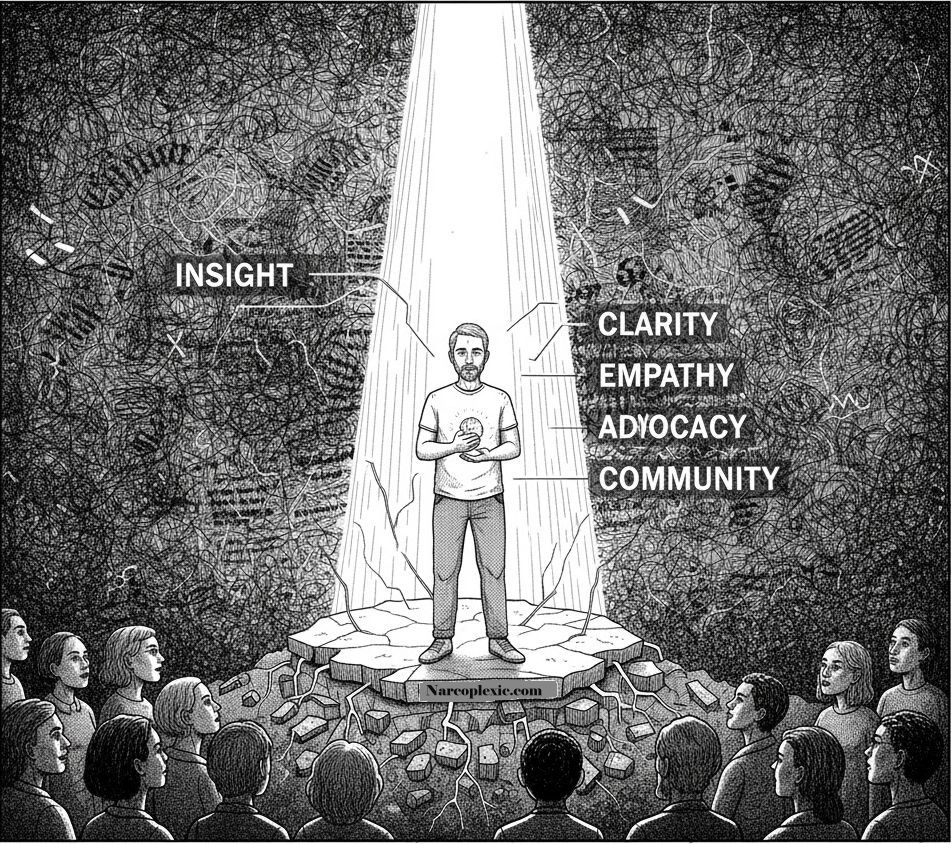
In response to this reality, I have poured my energy into the only work that made sense: advocacy. I write, I speak, and I create content about the human experience of these disorders and especially living with Type 1 Narcolepsy, because it is a perspective that is desperately needed. The medical and scientific communities have a clinical language for these conditions, but their terminology often oversimplifies and fails to capture the brutal real potential gravity, the nuanced reality of a life lived within them. The narrative must evolve, and it must be informed by those of us on the front lines.
This work is my passion and my expertise. But passion doesn’t pay the bills. The hard truth is that my website costs more to run than I make from my books. The advocacy work, which provides real insight and support to a community, is uncompensated labor.
I am at a crossroads. I cannot continue to spend what little resources I have on uncompensated work, no matter how important it is. I need to find a way to make a living doing what I can, when I can, how I can. My life’s work has been to understand and articulate this complex human experience. My perspective, forged through a lifetime of navigating these unseen challenges, has tangible value.
My goal now is to translate that value into a sustainable existence. I want to be paid for my expertise, my writing, my insights, and my ability to shed light on a reality that is misunderstood, downplayed, and ignored. Because for those of us living it, this isn’t a niche topic. It is life itself.
Disclaimer: The information provided in this article is intended for informational and educational purposes only. Seek a qualified medical professional with expertise in Narcolepsy for diagnosis or treatment. I am not a medical professional.
Spanish version
Japanese/ソロモン・ブリッグスによる日本語訳
Created by: Solomon Briggs
(aka Narcoplexic)
October 10th, 2025
My Work is Self-Preservation, Not by Choice: The Broken & Impossible Economics of an Invisible Life © 2025 by Solomon Briggs is licensed under CC BY-NC 4.0


To view a copy of this license, visit https://creativecommons.org/licenses/by-nc/4.0/
“You may use this tool for non-commercial purposes, but must credit Solomon Briggs.”