
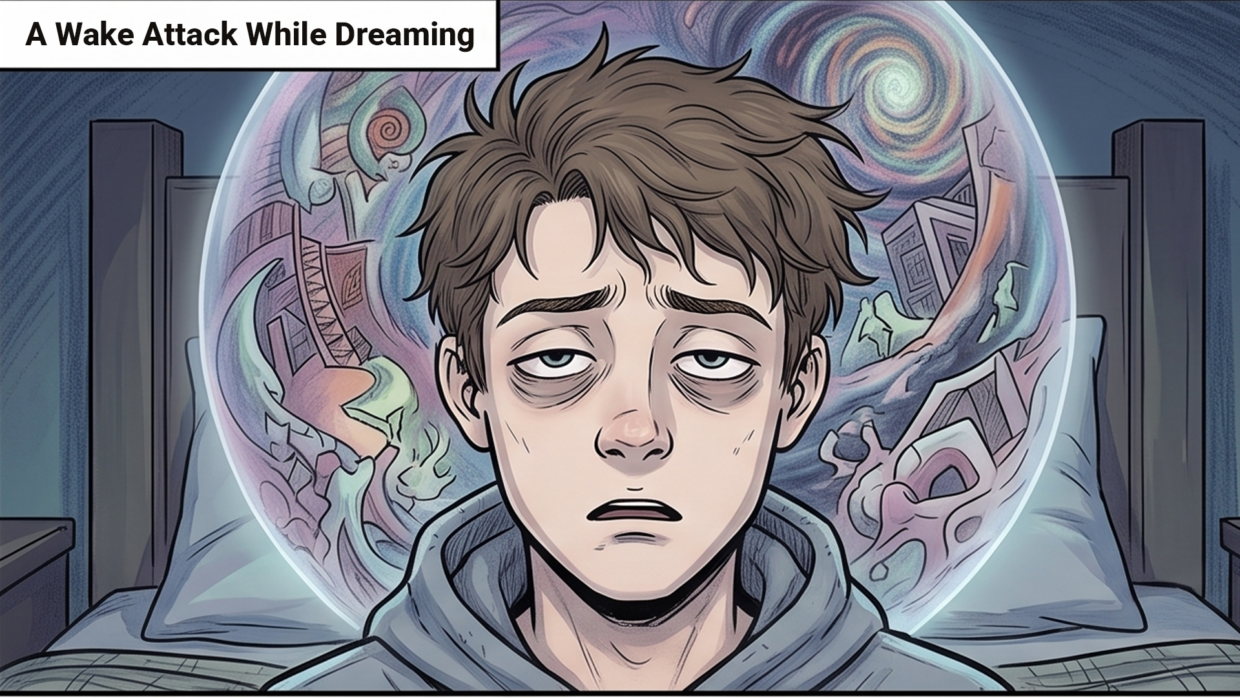
In the space of Central Disorders of Hypersomnolence, we are often tethered to the terminology of our symptoms; yet these terms frequently fail to capture the reality of our lived experience. A prime example is the “Sleep Attack.” To the general public, it sounds like falling into a full, sudden sleep state out of the blue. However, within the Narcolepsy and Idiopathic Hypersomnia community, it is understood as being “struck by a heavy sleepiness.” While sleep medicine doctors categorize this as Excessive Daytime Sleepiness (EDS), I see it as something far more complex: a state shift that integrates the core symptoms of narcolepsy, including hypnagogic/hypnopompic hallucinations and sleep paralysis, beyond just EDS.
When we consider the “Sleep Attack,” we must account for the vast spectrum of experiences it can trigger: automatic behavior, microsleeps, daydreaming, hallucinations, nodding off, dissociation from conscious wake-reality, sleep inertia, sleep drunkenness, sluggishness, fatigue, and brain fog. It is rarely just about reaching a full sleep state; it is often a sudden or slow shift into any combination of these occurrences.
This brings me to a term I am coining to describe the inverse experience: the “Wake Attack.”
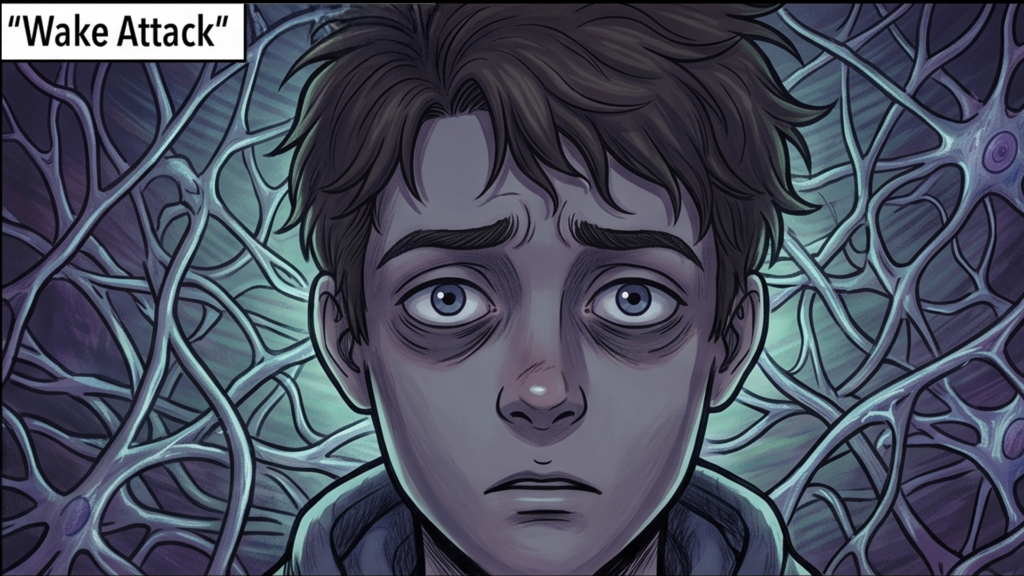
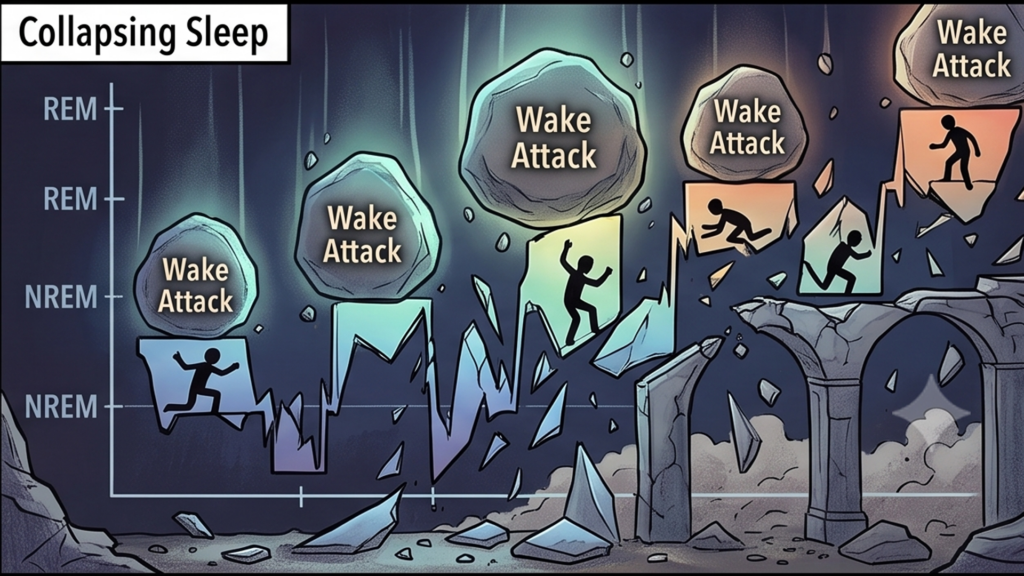
I experience these every single night, and they have become perhaps the most torturous and debilitating aspect of this disease. An awakening, a “Wake Attack,” can result in insomnia, but it is so much more than just being awake. It is a state shift into wakefulness during sleep. It can manifest as being “wide awake and dreaming,” where you are fully conscious within a dream, processing thoughts as you would while awake. It can be a jarring transition: going back and forth between a dream and the reality of lying in bed, re-adjusting, and then sinking back into a dream that you can no longer escape, lingering in a state of hyper-awareness. It is a burden on sleep quality and the ability to achieve any form of rest.
There is a growing conversation around “Disrupted Nighttime Sleep,” formerly termed “Sleep Fragmentation.” Recently recognized as the fifth core symptom of Type 1 narcolepsy, it is also prevalent in Type 2 narcolepsy and Idiopathic Hypersomnia. This discussion has gained momentum due to the development of Orexin B Agonists, which target the Orexin 2 receptor.
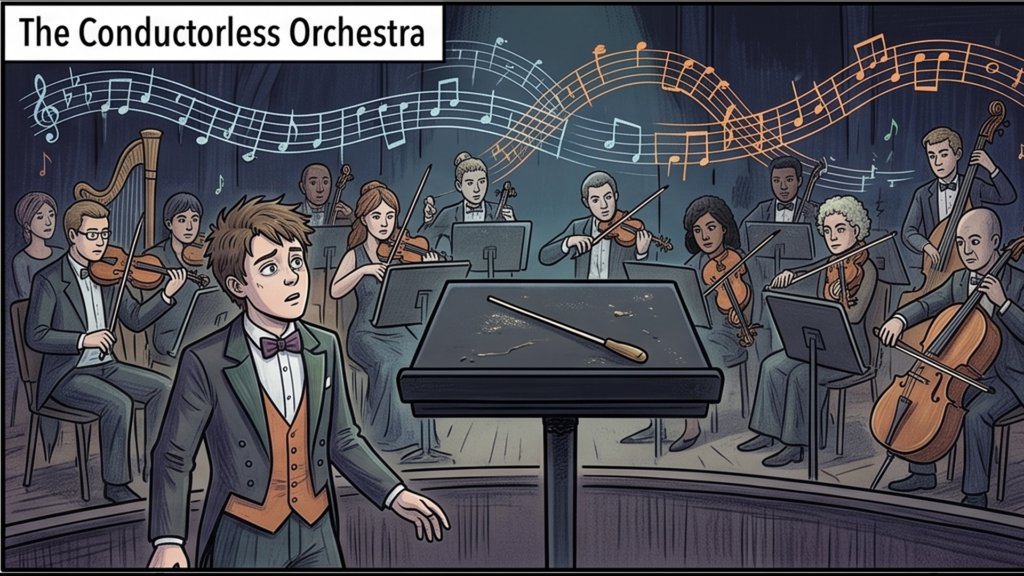
While the science is evolving, the narrative in medicine has historically prioritized “wakefulness” as the primary objective. We view the Orexin/Hypocretin system as the “conductor of the orchestra of neurotransmitters,” and its loss in Type 1 narcolepsy leads to a cascade of systemic regulation failures. Type 1 is so much more than a “sleep disorder”; it is a wide-spectrum disease involving difficult comorbidities resulting from this “haywire” regulation.
As we approach the potential approval of the first Orexin Agonist, such as oveporexton (Ozreyful) by Takeda, there is a “gold rush” mentality. For years, the hope has been that these drugs would be the “cure,” akin to insulin for diabetes. Yet, current clinical data suggests a more nuanced reality. Those who do not have baseline issues with sleep fragmentation may see improvements in sleep stability, but for those of us who do, the improvement is far less clear.
We must also confront a difficult possibility: the potential that these Orexin Agonists could further impact sleep quality. We have seen this pattern before with antidepressants and stimulants, and even with Sodium Oxybates, where many patients report highly fragmented and disrupted sleep. While I have not taken Oxybates myself due to personal comorbidity-related respiratory risks, the accounts from others in the community make it clear that the trade-off between daytime function and nighttime quality is a constant, exhausting struggle.
Since 2008, I have been deeply immersed in this community, having lived with the impact of cataplexy since 2000. I have learned to view the scientific narrative with a healthy dose of skepticism. There is often a divide between the “solid-factual” presentation of lab findings and the dynamic, variable reality of those of us living with the disease. There is a tendency in medicine to over-simplify this ordeal. We need the lived experience to be articulated, explored, and acknowledged.
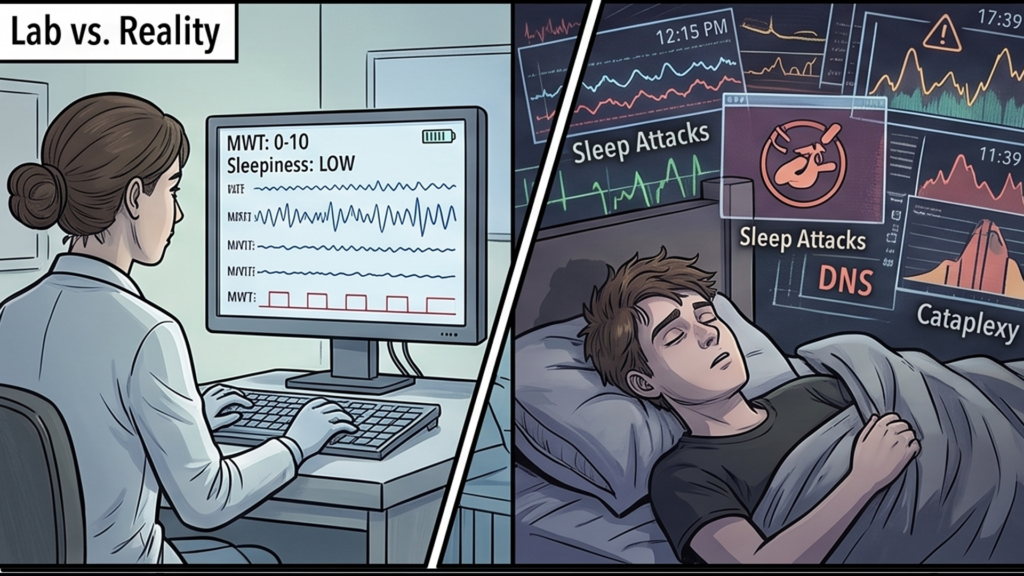
Disrupted nighttime sleep and the torture of nightly “Wake Attacks” can make a single night feel like a long, slow day. When I go to bed, I fall asleep easily, but within two to three hours, the “Wake Attacks” begin. Though I remain in bed for seven to nine hours, I am often awake for three to six of them.
My hope for the future of Orexin Agonists is that the clinical objective shifts to prioritizing the quality of sleep, not just the quantity of wakefulness. Whether through single Orexin B Agonists or future dual Orexin A and B Agonists, the goal must be to restore the capacity to rest. Until then, we continue to navigate this complex reality, and I suspect many others, including those with Sleep Apnea, will recognize the exhaustion inherent in this fight.
I would love to hear from others in the community about your own experiences with “Wake Attacks” and the impact of treatment on your sleep quality. Please feel free to share your thoughts and stories in the comments below on my site, Narcoplexic.com.
Disclaimer: The information provided in this article is intended for informational and educational purposes only. Seek a qualified medical professional with expertise in Narcolepsy for diagnosis or treatment. I am not a medical professional.
Created by: Solomon Briggs (Narcoplexic)
July 2026
The Flip Side of the Coin: Defining the “Wake Attack” © 2026 by Solomon Briggs is licensed under CC BY-NC-ND 4.0


– Credit must be given to you, the creator.
– Only noncommercial use of your work is permitted. Noncommercial means not primarily intended for or directed towards commercial advantage or monetary compensation.
= No derivatives or adaptations of your work are permitted.
To view a copy of this license, visit https://creativecommons.org/licenses/by-nc-nd/4.0/
“You may use this tool for non-commercial purposes, but must credit Solomon Briggs.”