The Disheartening Reality: A Call for Deeper Understanding in Narcolepsy Advocacy
I’ve grown disheartened by certain behaviors and attitudes within the community I’ve dedicated over 15 years to serving. My efforts have focused on helping others with Narcolepsy, especially the extra rare individuals who experience severe complete Cataplexy on a regular, frequently occurring, and ongoing basis over long periods. These individuals are already part of a rare population – people with Narcolepsy. And more broadly, some of what I’m speaking on is also directed towards those with other sleep disorders too.
My discouragement isn’t directed at anyone specific; rather, it stems from the broader reality of what is perceived as beneficial. Much of this is directly tied to deeply systemic and structural frameworks within healthcare and medicine, or what often seems to operate on the sidelines but is intrinsically linked to that same realm.
It’s important to clarify that my aim is not to attack any individual, entity, established group, or organization. The ongoing efforts are real, and I’m not trying to diminish their accomplishments, current work, or even their messaging.
The Problem of Oversimplification
On one side, the discourse almost invariably revolves around medications. Conversations consistently lead back to them: “seek out these meds,” “talk to your doctor about trying a different med,” “there’s always another med one can try,” “if symptoms progress, talk to your doctor about seeking another med,” and “a person with Narcolepsy can live a near-normal life on current meds.” These messages have been endlessly repeated over the years. For me, this approach largely skips over critically important points that should be at the forefront, not relegated to the very end or mentioned briefly. While there are ‘patient’ panels, discussion groups, brochures, infographics, and some truly critical information available, often provided upon request, they seem secondary.
On the other side of the equation – and this has bothered me for years, though I’ve only recently articulated it – is how shallowly or quickly the main symptoms, particularly the complicated deep science, are presented. It’s not the definitions of the symptoms I’m critiquing, but rather their common “packaging”. There’s an endless desire to reach newly diagnosed patients and offer them “more of something,” which I genuinely appreciate. This aligns with a point I’m about to make regarding messaging. However, there’s an even stronger push among established groups, organizations, and individuals trying to reach ‘patients’ for content that is “less words” and even simpler than what’s already out there.
While I don’t disagree that current materials can be lengthy or use complex terminology, and I see the disconnect, I struggle to understand why this isn’t more widely recognized. Perhaps it’s inherent to the system; most people don’t want to read extensively or exert significant mental effort (especially given that many with sleep disorders struggle with this, which I understand) to sift through “a bunch of complicated words.” This leads to an endless search for simpler words to replace complex ones, even when those complex words are clinical, diagnostic, and physiological medical terminology essential for connecting the dots.
My realization is that there’s a profound over-simplification (in my humble opinion) occurring. While this oversimplification might have contributed to scientific advancements in past decades before deeper understanding emerged, it seems to take decades for new medical science and understanding to reach healthcare professionals broadly, beyond the few dedicated experts in the field. Conversely, for individuals living with these conditions, especially Narcolepsy – given the harshly negative, profoundly real, and burdening stereotype surrounding it, not to mention the stigma associated with sleep itself in society and culture – it feels like so much of the actual lived human experience has been completely, almost entirely, skipped over. This includes what it means to experience and live with these difficult, abstract, complicated, often nearly invisible, deeply impacting, and often life-altering symptoms.
Bridging the Gap: The Invisible Puzzle of Narcolepsy
Gaining hands-on perspective, deep insights, and greater clarity is incredibly important, at least in my view, for others to truly grasp these conditions. It’s not just about piecing together the invisible puzzle that is Narcolepsy; it’s about connecting dots across all symptoms, including the critical science that directly relates to and helps visualize these invisible puzzle pieces, and then assembling the entire invisible puzzle.
There are real difficulties when dealing with a disease as complicated and complex as Narcolepsy, currently classified as a Sleep Disorder with two types and an alternately named condition, Idiopathic Hypersomnia, which aligns closely with Type 2 Narcolepsy. These are all categorized under Hypersomnolence Disorders in the Diagnostic Statistical Manual of Mental Disorders – Fifth Edition 2013 (DSM-5). Top experts in the field hold various opinions across these conditions: some believe Type 2 Narcolepsy and Idiopathic Hypersomnia are nearly identical, some see them as part of the same spectrum, while others consider them entirely separate.
For Type 1 Narcolepsy, there has been what I’ve seen referred to in medical literature as “the infancy of understanding” since 1998. The disease has gained significant attention in Sleep Medicine, though Positive Airway Pressure (PAP) therapy remains the primary reason sleep medicine exists and will continue to be its main focus. Understanding of Type 1 Narcolepsy has expanded greatly, yet much remains completely unknown, often unrecognized, and unacknowledged – except by a few dedicated, open-minded experts willing to better understand the realities of how the disease affects individuals.
The scientific hypothesis for decades has been that Type 1 Narcolepsy is rooted in damage from an autoimmune attack process related to a common genetic HLA marker (DBQ1*0602) (present in ~30% of the general population), triggered by environmental factors like strep throat, H1N1, certain flu strains or viruses, or head trauma. This damage occurs deep in the Hypothalamus, affecting Hypocretin/Orexin (the same neurotransmitter) receptors. This hypothesis has driven awareness efforts and a massive push by pharmaceutical companies to create new medications, such as an Orexin/Hypocretin Agonist, to replace these lost, missing, or inoperable neurotransmitter cells. (It remains undetermined, with no “smoking gun,” exactly what is fully occurring.) Recent research (https://teams.semel.ucla.edu/sleep-research) further highlights that not only are Hypocretin/Orexin cells limited or lost in Type 1 Narcolepsy, but a similar occurrence is also happening in the Locus Coeruleus, a spot at the top of the brainstem near the Hypothalamus where Orexin/Hypocretin is secreted. The Locus Coeruleus also appears to have undergone neuro-degenerative changes.
Given all this, the disease strongly resembles an “Organ-Specific Autoimmune Disease,” similar to Type 1 Diabetes Mellitus, Multiple Sclerosis, Hashimoto’s Thyroiditis, Grave’s Disease, Celiac Disease, Addison’s Disease, and Myasthenia Gravis. My point here is the vast, expansive, and variable opinions across the field, with so much remaining unknown or unclear. This complexity makes the current oversimplified presentation of these conditions highly problematic.

My Role as an Independent Advocate
My efforts are rooted in opinion, and certainly influenced by my own lived experience bias. However, I aim to offer this perspective purely as a resource to help others living with this difficult, impactful, and life-altering ordeal (with or without Cataplexy, as it is all extremely challenging). I also want to educate doctors about the actual lived experience of living with these symptoms, this condition, the disease, and sleep disorders broadly.
I don’t speak carelessly. Over the past 15+ years (nearing 20) – building on nearly 30 years of personal experience (really 45 years to be fully honest, 25 years since Cataplexy altered my life dramatically) with symptoms affecting me profoundly, including Cataplexy since childhood – I’ve become deeply immersed in medical literature. I’m regularly active online, engaging with others’ experiences and perspectives, and I’ve attended over 20 different Narcolepsy events hosted by non-profit organizations. These opportunities have allowed me to interact briefly with many of the top doctors in the field, asking precise, intentional questions formulated from combining in the interactions with others, the medical literature I’ve absorbed, and my own personal experiences. Time and again, their responses have been profoundly validating. When they haven’t completely aligned, I’ve revamped my perspective, which often expands to incorporate their answers. This validation largely reinforces my confidence in expressing and articulating my views.
While some of my breakdowns, perspectives, and ways of connecting the dots may not be 100% in line with mainstream consensus among top medical professionals, but even among them, varied and sometimes conflicting perspectives exist. Therefore, I’m not afraid to speak honestly, bluntly, and directly. I always strive to state that what I’m sharing is opinion, not medical advice, and that individuals should seek help from an expert medical professional. Nothing I’m stating attempts to offer a cure; it’s straight-up perspective towards the lived human experience, designed to help better comprehend and potentially begin to grasp what might be occurring within this difficult, often decades-long, if not lifelong, invisible puzzle.
I’m not trying to go against healthcare professionals, claim science is wrong, or diminish awareness efforts. Not at all. Nor am I trying to discourage people from trying medications; I encourage everyone to try what they can. However, it’s crucial to know your baseline beforehand and be attentive, both in the initial short term and over the long term, ensuring the positives outweigh the negatives – a point not emphasized enough, in my opinion.
My goal is to dig deeper, focusing on the actual lived human experience. The spectrum of, say, Type 1 Narcolepsy alone is profoundly wide. This profound breadth, coupled with limited clarity and insights into the human experience, points back to the oversimplified messaging. I aim to delve into the fluidity, reality, and often simultaneous fluctuation of sleep disorder symptoms. I’m trying to highlight where improvements can be made, not just to create simple phrases that might draw someone to a particular viewpoint or encourage a single direction.
For me, it’s about empowering individuals to piece together their own invisible puzzle. While similarities exist across all persons living with these conditions, each individual’s actual experiences will differ vastly, as will their descriptions, terminology, framing, and interpretations. My efforts are thorough because, unless you’re deep in medical literature (which primarily focuses on labs, mice, dogs, and children more than adults – unless it’s surveys – or deceased human brains), the focus for decades, in my opinion, has not been on the lived human experience. With so much new science leading to new understanding and recognition on that side, the lived human experience must also be tackled and evolved. To leave it as is would perpetuate the ongoing division, misunderstanding of symptoms, rampant confusion (especially regarding Cataplexy), and a massive issue of recognition within communities. Most importantly, the stigma and stereotype continue to have profound, vast, negative, and super-impacting effects, with limited acknowledgment from the general public and, concerningly, from doctors who are supposed to help. The information is presented in a massively oversimplified manner.
My Personal Journey: Living with Invisible Symptoms
My own attempts to understand some of these symptoms began long before I even had a term for what was happening. This background explains why I persist in my role as an “independent advocate,” or more accurately, an individual with a vastly misunderstood disease who lived within a seemingly tiny percentage of people experiencing this ordeal: severe-complete, collapsing Cataplexy over a long span of time – a decade of my life. Specifically, I dealt with collapsing during pleasant/joyful interactions on a regular, frequently occurring basis. This began at age 20, though as a child, I had a similar peculiar occurrence to a lesser, moderate-partial severity extent. I couldn’t articulate it then, beyond saying my arms were limp in tickling battles while I could continuously laugh and roll my body.
In my 20s, I began to describe it as “a dissipation of my muscles during pleasant interactions,” but beyond that, it was simply broken. Perhaps I could have said I experienced “weird muscular interference.” So, in a way, it was profoundly oversimplified for me then, but that’s as simple as I could express it. The part that has driven me disheartened, not bonkers, is this: if you cannot even begin to see the complex invisible puzzle that forms the framework of what’s happening, how can you truly comprehend it? How are you supposed to figure out how to improve the situation, or begin to explain and discuss that ordeal? For me, it wasn’t until I was 28 that, thanks to searching Google with “laughter AND paralysis,” I found an article on Cataplexy, a symptom of Narcolepsy, with a definition that fit the experience I’d been dealing with for so long – collapsing 5-25 times or more each week throughout my 20s. By 31, after years of a very complicated and horrendous path to diagnosis (a massive issue for another write-up), I received the confirming diagnosis at Mayo Clinic.
The symptom of Cataplexy literally took away the life I knew before age 20. Its impacts were so deep and scarring that even though the collapsing has regressed to maybe once or twice every couple of years since age 30, at currently in my mid-40s, I’m still incapable of living anywhere remotely near how I easily could before 20. Through my 20s, I did everything possible to overcome, out-strengthen, or overpower it. I quickly realized it was the same odd, peculiar ordeal I’d dealt with as a child. When I voiced it in specific instances as a child, no one thought anything of it or could respond. Why? Because it occurred during normal, pleasant, fun, joyful interactions like tickling battles or intense laughter. My voicing could have been considered an excuse to escape losing a tickling battle, or just an oddity that no one knew how to respond to it – again, pointing back to that invisible puzzle, not just internally, but externally.
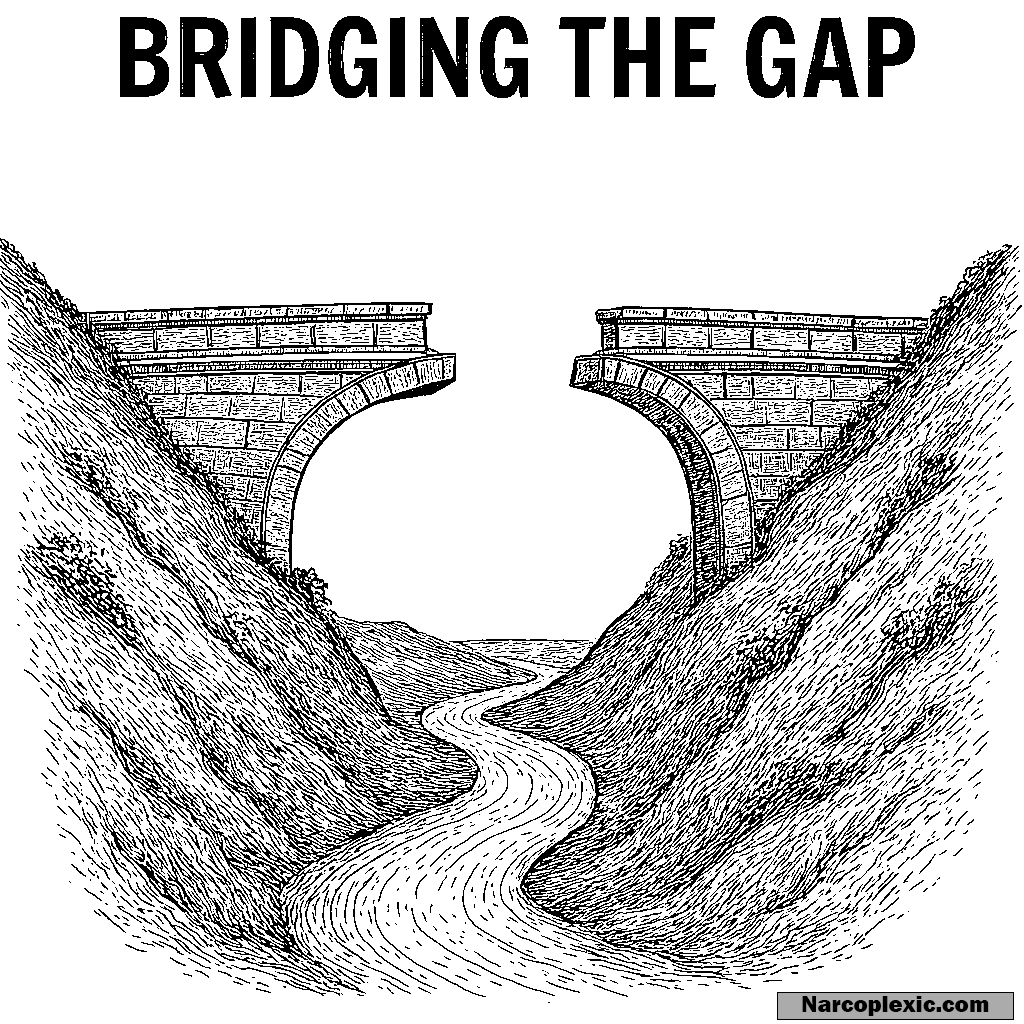
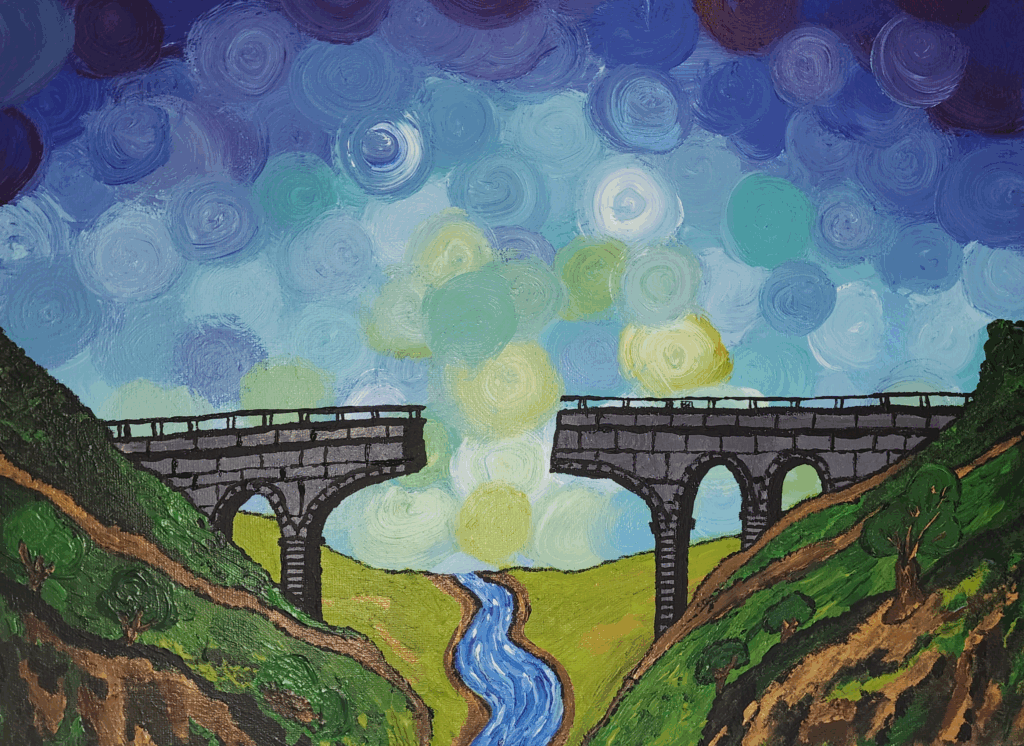
I could go on and on, but I’ll cut myself off and simply say: my efforts are towards “bridging the gap,” hoping to see and help facilitate a real “evolving in the understanding along with terminology” around sleep disorders broadly speaking. Not being a doctor or a so-called researcher myself, I pursue this independent advocacy straight from my heart and without any funding whatsoever. It has been very costly over the years, and even though I’ve self-published some books, the cost of keeping my website up has far exceeded any income.
That said, I would love to interact and engage with individuals living with these conditions and doctors trying to better comprehend them. Furthermore, participating in research and gaining some actual clout or credentials is highly desired. Yet, at the same time, I have no desire to lose my ability to deliver a pure, honest, blunt message and perspective free from common biases prevalent out there.
Spanish/Espanol Translation by Solomon Briggs
Japanese/ソロモン・ブリッグスによる日本語訳
Using NotebookLM, I created this ~29 minute audio – sort of podcast – file.
To this I added various sources in addition to this write up, as the main source.
It created as a 2 person discussion.
These are the additional sources that I gave for it to draw from throughout the discussion:
– “Orexins/Hypocretins: Key Regulators of Energy Homeostasis”
https://www.frontiersin.org/journals/endocrinology/articles/10.3389/fendo.2019.00830/full
– “The physiological role of orexin/hypocretin neurons in the regulation of sleep/wakefulness and neuroendocrine functions”
https://pmc.ncbi.nlm.nih.gov/articles/PMC3589707/
– “Orexin (hypocretin) participates in central autonomic regulation during fight-or-flight response”
https://pubmed.ncbi.nlm.nih.gov/33741478/
– “Siegel Lab – Center for Sleep Research”
https://teams.semel.ucla.edu/sleep-research
Disclaimer: The information provided in this article is intended for informational and educational purposes only. Seek a qualified medical professional with expertise in Narcolepsy for diagnosis or treatment. I am not a medical professional.
Created by: Solomon Briggs
(aka Narcoplexic)
July 8th, 2025
Bridging the Gap: The Lived Experience of Narcolepsy – A Call for Evolving Understanding and Terminology © 2025 by Solomon Briggs is licensed under CC BY-NC 4.0


To view a copy of this license, visit https://creativecommons.org/licenses/by-nc/4.0/
“You may use this tool for non-commercial purposes, but must credit Solomon Briggs