I’ve spent nearly 20 years now deeply immersed within the science and medical literature surrounding Narcolepsy. I’ve been throughout all of those years interacting frequently with others in the community, absorbing their experiences, while participating in conferences and discussion groups alongside many of the top doctors in the field. My aim is to connect the dots between the clinical/diagnostic terminology and the actual lived human experience.
Some may find what I’m about to discuss controversial or off-base, but frankly, I don’t care. Nothing has impacted and dramatically altered my life more than the severe-complete Cataplexy I experienced throughout my 20s, an impact I still feel today in my 40s.
In my view, we urgently need a re-focusing on the human experience of this disease.
The Infancy of Understanding
Despite profound scientific discoveries in recent decades, we are still largely in the “infancy of understanding” Narcolepsy scientifically. It is incredibly complex, and there is no truly definitive, universal, or complete comprehension of it yet.
Currently, too much is oversimplified and overgeneralized. While this is often standard practice in medicine to minimize difficulty in diagnosis, in the case of Narcolepsy, it becomes deeply problematic. The five core symptoms generally discussed are actually more like up to 100 different symptoms or experiences. This oversimplification is particularly stark when discussing Sleep Paralysis and Cataplexy.
Cataplexy and Sleep Paralysis: A Shared Mechanism, Distinct Realities
To start connecting these dots: both Cataplexy and Sleep Paralysis involve ‘muscle atonia’. This is the body’s natural mechanism that temporarily paralyzes muscles during dream/REM sleep, protecting us from physically acting out our dreams.
However, the experience of these symptoms is far more vast than typically acknowledged. Both operate on a broad spectrum of severity.
Deconstructing the Cataplexy Spectrum
Cataplexy is ‘like a reaction’ that occurs during emotional stimulation or during strenuous physical exertion when a person is beyond their energy reserves. This fluctuation can happen “in the moment” or “over ongoing moments”.
Here is how I break down the broad and wide-open spectrum of severity:
Minimal-Partial Cataplexy
This involves subtle physical impacts that are muscular interference, interruptions, disruptions, dissipation, or difficulties. While muscle weakness is present and lingers, the neurophysiological impact is more complex.
Note – the commonly used terminology “muscle weakness” is a part of Excessive Daytime Sleepiness, Sleep Attacks, and Fatigue. The use of such terminology (IMHO) obstructs actual understanding and comprehension of Cataplexy itself.
Manifestations may include:
- Loss of muscle tone.
- Loss of muscular control.
- Loss/melting of facial expression.
- Loss of grip.
- Loss of ability to laugh.
- Disruptions or difficulties with speech, such as slowing, pausing, slurring, stuttering, or inability to complete a thought.
Furthermore, many experience subtle sensory phenomena that not all recognize, such as wave-like sensations, or flickering of muscles, fluttering, tingling.
Moderate-Partial Cataplexy
These impacts are stronger physically (and often include stronger sensory experiences).
- One may suddenly experience a physical freeze, feeling unstable and losing composure.
- Laughter may dramatically physically melt away, while internally be strong.
- The person might need to promptly sit down or lean against a wall to remain upright.
- Time can seem to stand still, as the person may dissociate from the external environment while internally attempting to stay composed – a very different dissociation from what occurs during Sleep Attacks being from consciousness.
Severe-Complete Cataplexy
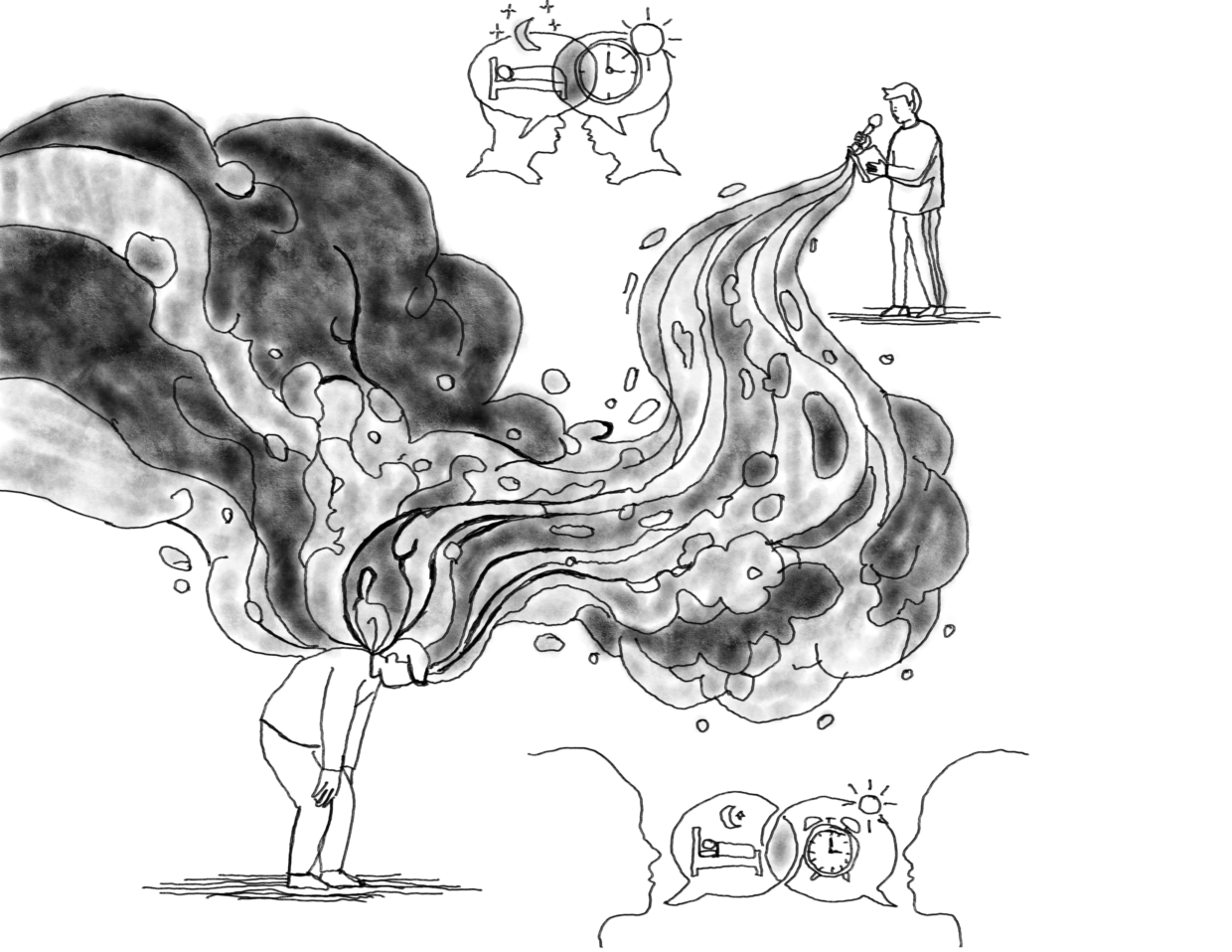
This involves a temporary complete muscle paralysis. This point can be reached slowly as the symptom fluctuates, or it can happen in a near-instant moment. The person may collapse or melt to the ground. Generally, this paralysis lasts under 30 seconds, though it can sometimes be much, much longer.
Important Note: The severe-complete experience is rare. According to data presented by researchers years ago, under 10% (more likely under 5–7%) of those with Cataplexy will experience this extent of the symptom on a regular basis over a long span of time. Thus, the majority of people with Cataplexy cannot relate to much of this severe experience, or at least beyond in some rare instances. When it is a frequent regular severe-complete ordeal, the symptom/condition becomes a much graver impacting matter, being profoundly, unfathomably, life-altering. For some reason this seems to be the case. Likely in large part due to the rarity but also the difficulty/complexity of this symptom/condition. Not just the matter of emotional stimulation and paralysis being combined, on the table. But, the deep depths psychologically that are involved and continue to go completely invisible; while actually very much not being invisible at all, when one is tuned into an individual dealing with the symptom to such an extent, there are profound psychological impacts.
The Sleep Paralysis Spectrum (Going Against the Grain)
This is where my take may go against the common medical grain, though many (including some top doctors) have told me this framework makes sense. Just like Cataplexy, Sleep Paralysis has its own minimal, moderate, and severe symptom severity range.
Minimal-Partial Sleep Paralysis
This often involves awakening with a lingering heaviness throughout the body, potentially lasting for hours. The limbs feel slow and difficult to move, accompanied by a serious desire and feeling of needing to get back into bed to sleep more. “Walking through peanut butter” is a quote that has been used to describe it. There is also the element of cognition and attentiveness, mental energy, being slow and effected, lingering into the day.
This experience is frequently described using the terminology common in Idiopathic Hypersomnia (IH), known as ‘Sleep Inertia’ along with ‘Brain Fog’.
Moderate-Partial Sleep Paralysis
This is the Minimal-Partial state amplified, perhaps profoundly. The person might be staggering and seem to experience certain muscular interference, interruptions, or difficulties similar to Cataplexy, but critically, without the stimulation of emotion.
This state is often described as ‘Sleep Drunkenness,’ a term also used more commonly in IH.
Severe-Complete Sleep Paralysis
This is what is currently recognized as Sleep Paralysis generally speaking. It is the experience of awakening conscious and awake in a full, temporary muscle paralysis. The key difference here is that it is a lingering from sleep, rather than an intrusion into wakefulness, which is how Cataplexy presents.
Pushing for Evolution
I have been sharing these perspectives for years, driven by the hope of helping things evolve in terms of how we understand the actual human lived experience. I write this because I have been deeply fascinated by, affected by, and immersed in Narcolepsy for almost two decades now. While I voice my take when I can, many of the experts seem to just respond with a blank stare, though some validate it saying it makes sense and pointing out how the healthcare professionals don’t always do a good job at updating things.
We know the Orexin/Hypocretin deficiency is fundamental. This neuropeptide is considered the “regulator of the orchestra of neurotransmitters”. It is responsible for regulating core semi-autonomous body functions, including the integration of physical energies (sleepiness/exhaustion) and psychological energies (stress/anxiety), as well as cognition and vigilance (blending the psychological and physical energies).
However, based on ongoing science, such as the work from Dr. Jerome Siegel and his team, there is seemingly more on the table to this disease than what is currently figured out and connected. Time will tell.
I am not claiming anything I’ve said is definitive, but I am offering a perspective, one that connects the dots based on years of immersion in the science and the vast collective human experience.
If nothing else, I am documenting such with the hopes mentioned above, evolving things for the better as currently there is a major to massive lacking of clarity and actual insights being offered towards the human lived experience of Narcolepsy symptoms.
Disclaimer: The information provided in this article is intended for informational and educational purposes only. Seek a qualified medical professional with expertise in Narcolepsy for diagnosis or treatment. I am not a medical professional.
Spanish version
Japanese/ソロモン・ブリッグスによる日本語訳
Created by: Solomon Briggs
(aka Narcoplexic)
October 19th, 2025
Going Beyond the Textbook: Deconstructing the True Spectrum of Cataplexy and Sleep Paralysis © 2025 by Solomon Briggs is licensed under CC BY-NC 4.0


To view a copy of this license, visit https://creativecommons.org/licenses/by-nc/4.0/
“You may use this tool for non-commercial purposes, but must credit Solomon Briggs.”.