Important Disclaimer & Perspective Medical Disclaimer: I am not a medical doctor. The information in this review is for educational and advocacy purposes only and does not constitute medical advice. Please consult a qualified healthcare professional regarding any changes to your medical care or diagnostic path.
An Advocate’s Perspective: As a longtime patient advocate living with three distinct, rare, and “invisible” sleep disorders, I know firsthand how incredibly difficult this territory is. Each of these conditions carries severe short- and long-term health risks that directly impact your quality of life. Sleep health is not something to ignore, yet too often people choose to overlook, brush aside, or completely walk away from the warning signs of a sleep disorder rather than confronting it directly.
This write-up focuses on a device that has provided profound clarity for my own sleep apnea. To be clear: this device is not a cure or a fix-all in any way. Instead, it is a powerful optic, a frame to look through to understand exactly what is happening to your body overnight, while acting as a vital safety net to alert you the exact moment your breathing drops into dangerous territory.
For anyone navigating the complex world of sleep disordered breathing, finding a tool that provides both clarity and actionable support can feel like an endless search. I have spent nearly two decades managing a severe and rare combination of sleep disorders, including Type 1 Narcolepsy with complete, collapsing cataplexy, and untreatable Idiopathic Central Sleep Apnea (ICSA).
Since July of 2024, I have worn the Wellue O2 Pulse Oximeter with Smart Reminder (Style 1) every single night. It has fundamentally changed how I manage my sleep health. Below is my honest, unaffiliated review of this device after nearly two years of continuous, nightly use.
Who is This Device For? This device is an invaluable tool for anyone who already knows they have sleep apnea, or suspects they might. It is highly relevant if you or your sleeping partner experience:
- Loud snoring interrupted by sudden pauses in breathing.
- Awakening short of breath, gasping, or feeling like you must consciously “force” your autonomous breathing to resync.
- Frequent morning headaches or shallow nighttime breathing without snoring.
- Chronic nighttime congestion or post-nasal drip that blocks one or both nostrils.
While it does not replace a clinical polysomnogram (PSG), it provides an exceptionally clear window into just how interrupted your sleep actually is on any given night.
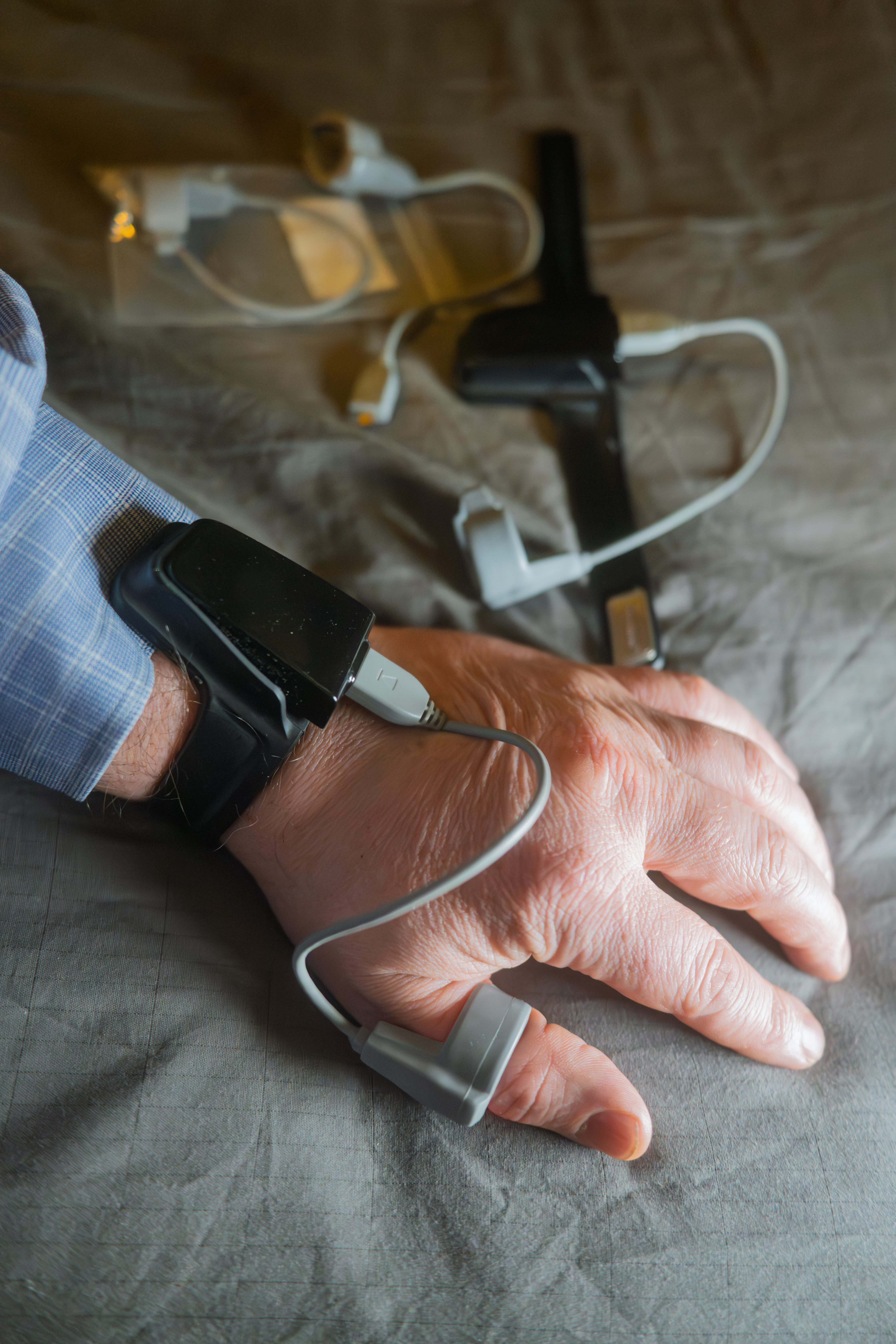
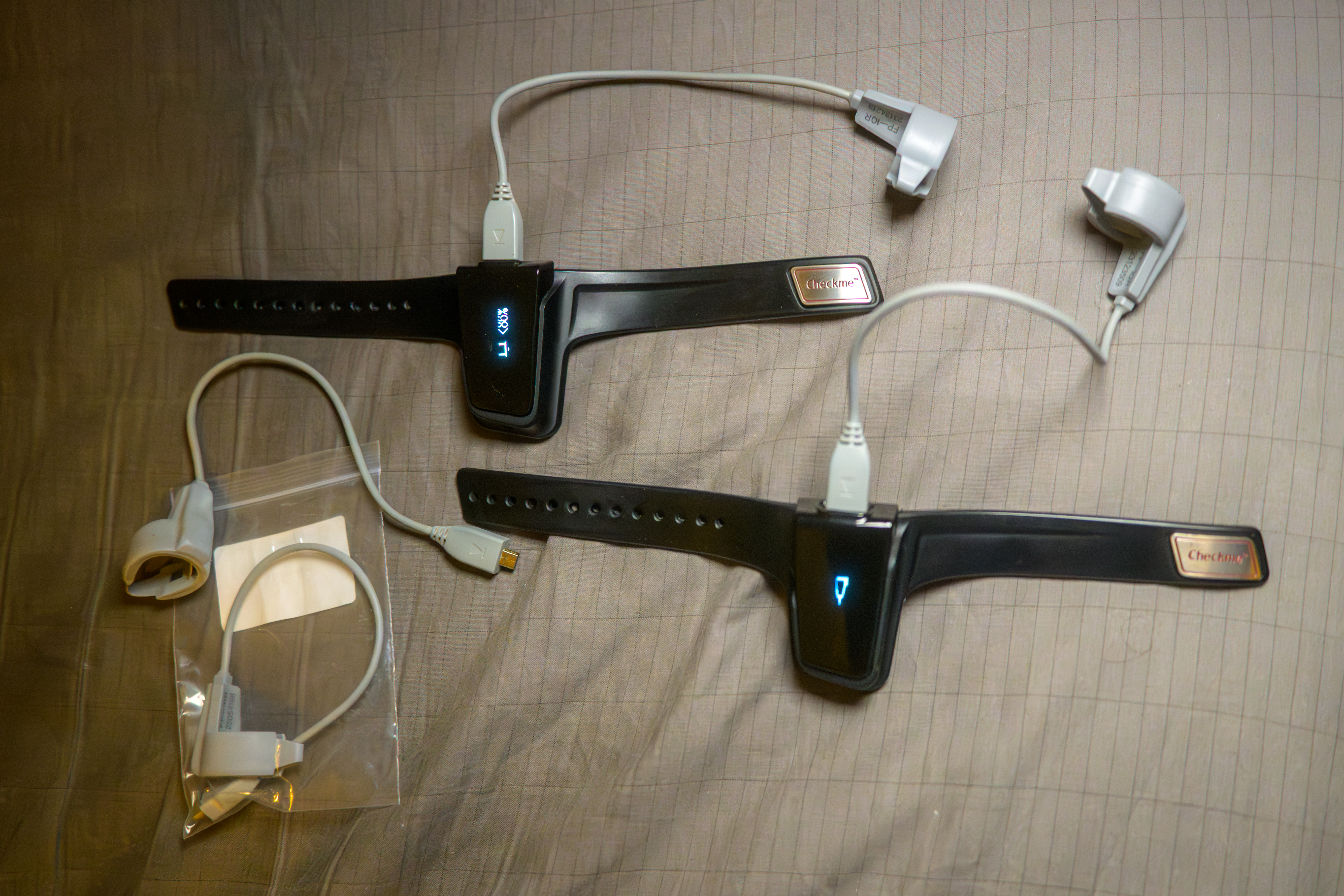
Features and Functionality: Why It Stands Out The Wellue O2 system consists of a lightweight wrist unit connected by a small wire to a soft, comfortable rubber ring sensor containing a red LED. I wear the sensor on my thumb.
Unlike basic pulse oximeters that only display numbers on a screen, this device offers three critical core components of functionality:
1. Continuous, High-Resolution Tracking The ring continuously tracks three critical metrics while you sleep:
- Blood Oxygen Saturation (SpO2) Levels
- Pulse / Heart Rate
- Body Movement
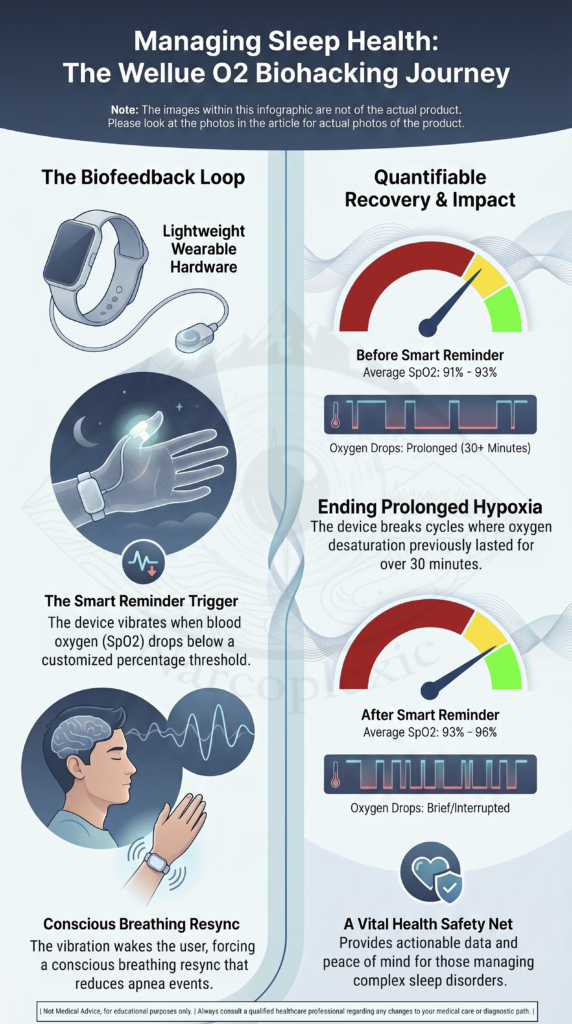
2. The Smart Reminder Feature (The Real Game-Changer) This is the feature that sets the Wellue apart. Through the app, you can set a specific SpO2 percentage threshold. If your oxygen drops to that level, the device triggers an immediate alert. If connected to your phone via Bluetooth, a loud alarm sounds through the phone while the thumb ring vibrates. If used standalone without a phone connection, the ring itself delivers a strong vibration to nudge you out of a dangerous respiratory dip.
3. Deep-Dive Reporting When you wake up, the device syncs seamlessly to a free mobile app or PC software. You can review detailed graphs of your entire night, save favorites, and track long-term trends in your oxygen levels, pulse spikes, and movement.
Daytime Utility & Self-Advocacy An important additional note is that the device is also highly usable while awake. For me personally, this is extremely valuable because I actually experience apneas while awake, not just while asleep. Capturing this provides real data, which I can use to not just validate but advocate my experience further for myself to the doctor – something that people should be doing more and more with the wearable devices available today. The data within the device can additionally be easily transferred or copied by hand onto a sleep journal or diary. I am mentioning this because it is something anyone going to a sleep doctor, for whatever reason, should do to bring with them.
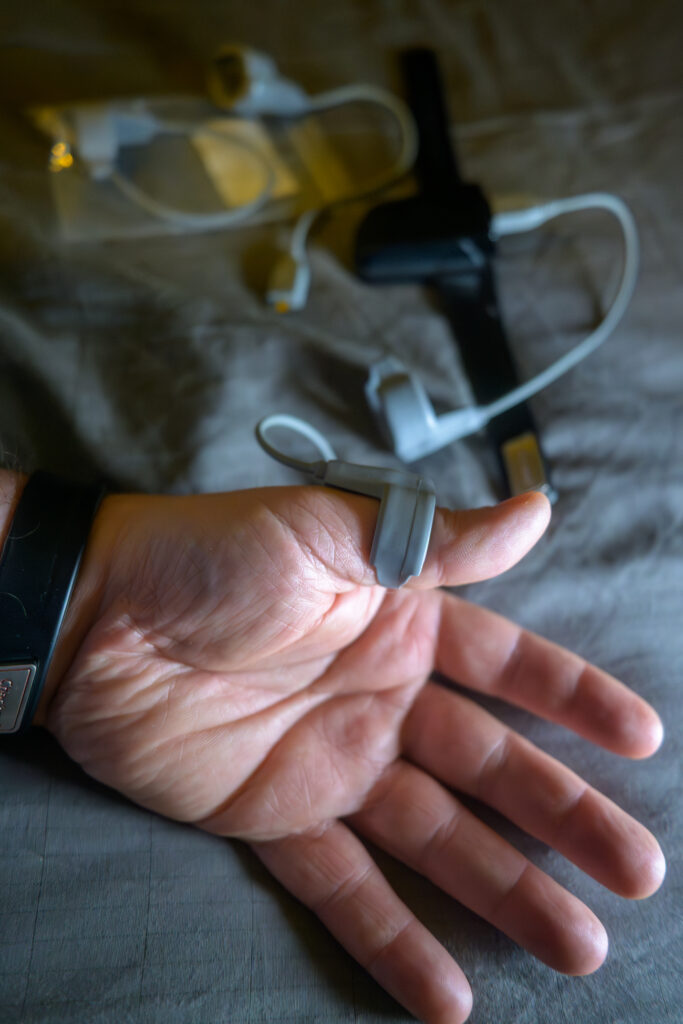
My Personal Journey: Biohacking Idiopathic Central Sleep Apnea To understand why this device became so vital to me, it helps to understand the predicament I was, and live, in. I have lived with Idiopathic Central Sleep Apnea (ICSA) since it was first flagged around 2008. Unlike Obstructive Sleep Apnea (OSA) – where the airway physically collapses – ICSA is a neurological disconnect. The brain simply fails to signal the respiratory muscles to breathe. While Central Sleep Apnea (CSA) is often tied to secondary conditions like heart failure, head trauma, or certain medication use, there are also cases where the underlying cause is completely unknown. In my case, the diagnosis is Idiopathic (meaning ‘for an unknown reason’) Central Sleep Apnea.
Between 2008 and 2011, my road to diagnosis was incredibly rocky. Because sleep medicine is heavily oriented toward Obstructed Sleep Apnea (OSA – which affects millions), my initial sleep studies focused heavily on my air passages. I spent an exhausting year attempting to use three different PAP therapy devices, all of which failed to improve my breathing and ultimately threw my health into chaos, skyrocketing my cataplexy collapses and forcing me into ear surgery.
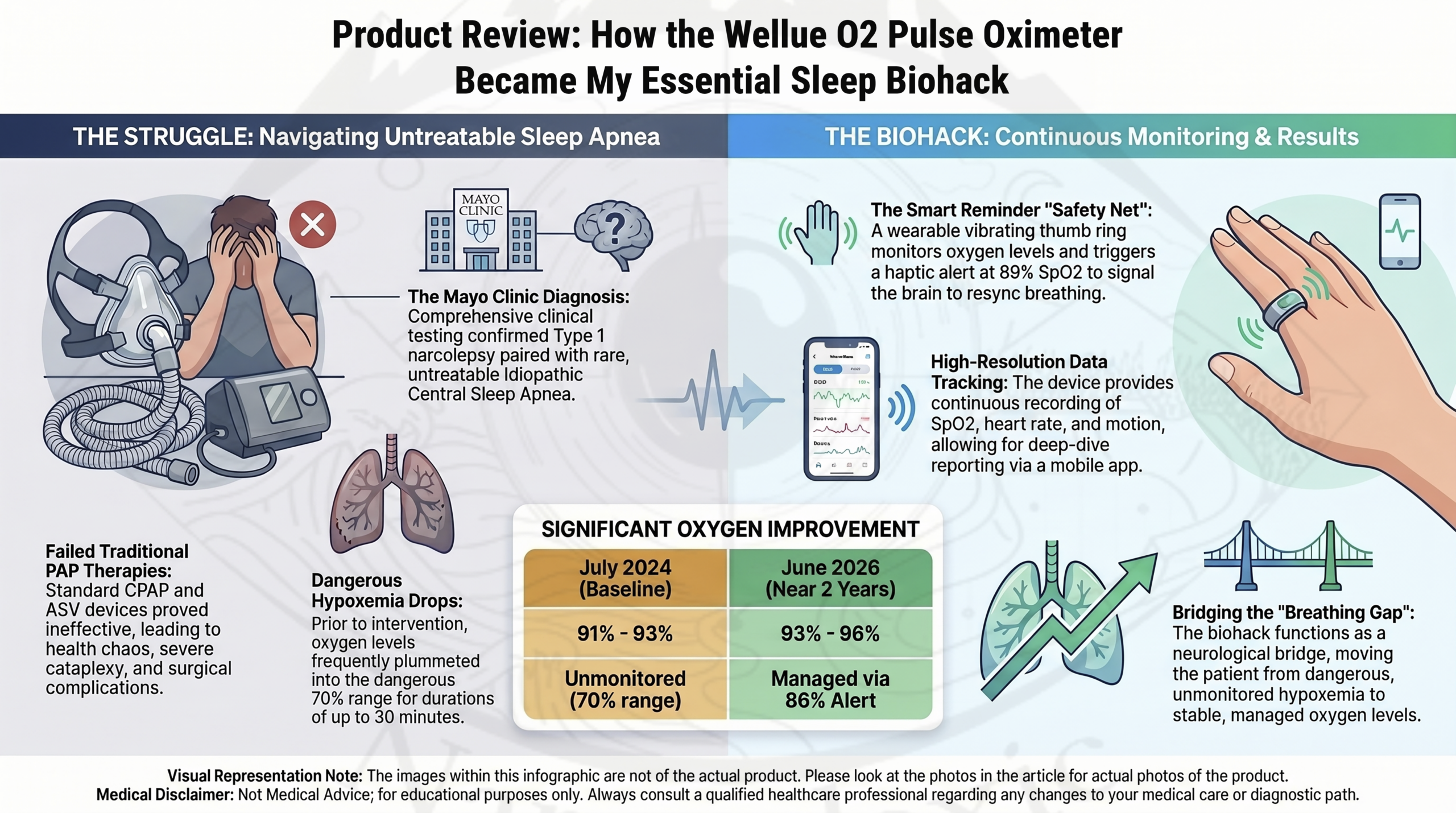
Realizing I needed world-class expertise, I traveled 16 hours to the Mayo Clinic for a comprehensive three-week evaluation. The specialists at Mayo confirmed the PAP devices were not benefiting me and advised me to discontinue them, ultimately diagnosing me with Type 1 Narcolepsy with Definitive Cataplexy, Delayed Sleep Phase Syndrome, and a rare, untreatable Idiopathic Central Sleep Apnea.
Facing Hypoxemia in 2024 By the summer of 2024, I hit a dangerously rough patch. I was constantly awakening completely stopped down, gasping to force my body back into autonomous breathing. I was regularly slipping into scary episodes of hypoxemia, and with standard clinical medicine having few alternatives left to offer me, I bought the Wellue O2 ring on Amazon out of pure necessity to gauge exactly how bad my drops were.
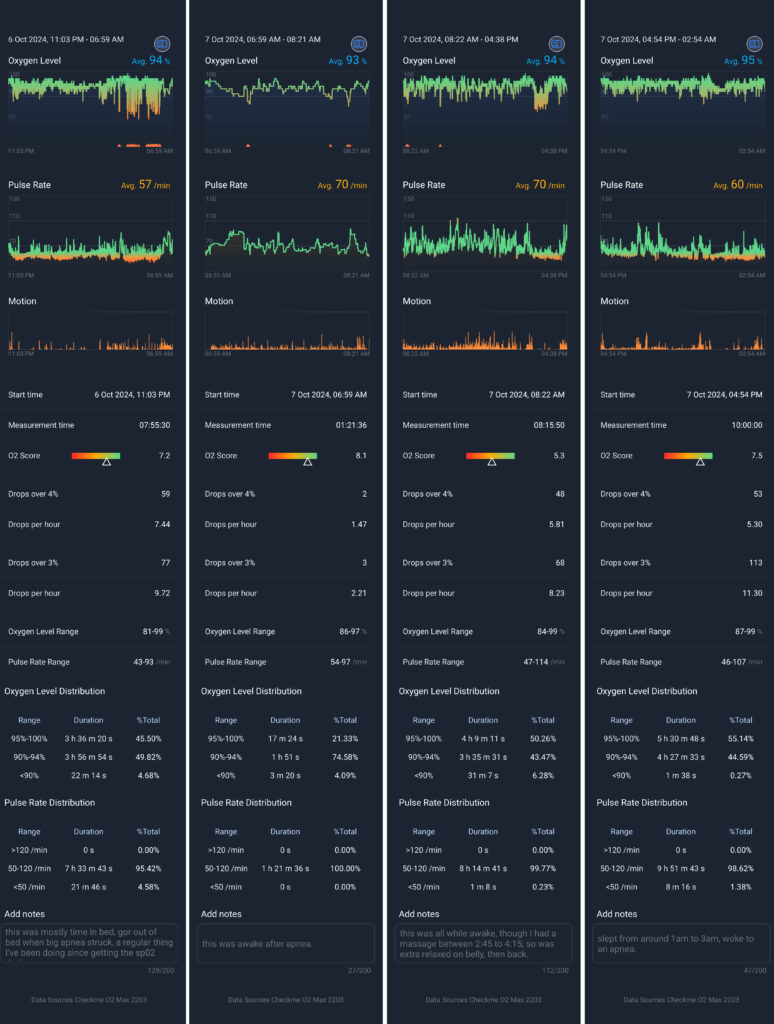
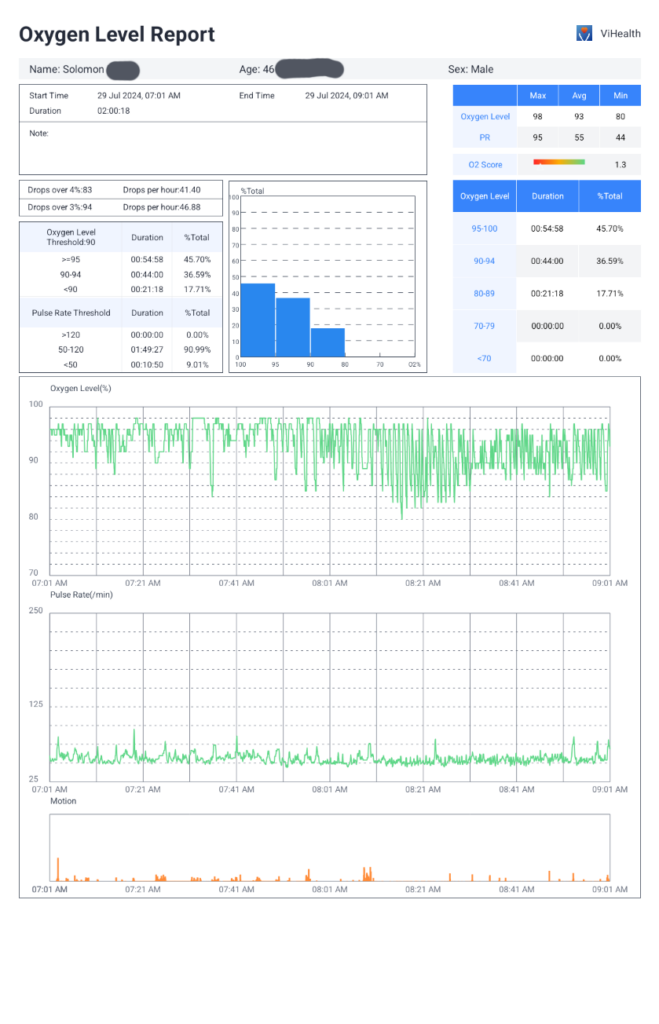
The Results: 2 Years of Real Data The initial data confirmed my worst fears: I was experiencing prolonged, massive oxygen drops straight down into the 70% range, with some desaturation waves dragging on for over 30 agonizing minutes. In July of 2024, my baseline average SpO2 was hovering dangerously between 91-93%.
I immediately activated the Smart Reminder, setting the threshold to 89% SpO2.
- Weeks 1–2: The adjustment period was tough. Getting woken up repeatedly by a vibrating thumb was incredibly annoying, but it was doing exactly what I needed it to do. It broke the cycle of prolonged, dangerous oxygen starvation.
- Months 1–2: My overall sleep quality and quantity began to steadily improve. Because the device was cutting off the apneas before they could stretch into minutes-long events, the massive stress on my brain and heart leveled out.
- Long-Term Progress: Eventually, I was able to lower the alert threshold to 86% SpO2. Today, nearly two years later, I am in a vastly superior health position. Thanks to this daily intervention, my overall average SpO2 has successfully improved from that initial 91-93% to a much healthier 93-96%.
I view this device as a successful biohack. By utilizing the physical vibration to alert my conscious brain right as an apnea begins, I have managed to bridge the neurological divide between my brain and my respiratory muscles. When I drop to a certain SpO2 level, the device physically wakes me up. This vital interruption forces me to consciously focus on my breathing while awakened, before it is more so completely stopped (dead-air), which directly results in shorter, less extended apneas and a far less severe SpO2 drop overall.
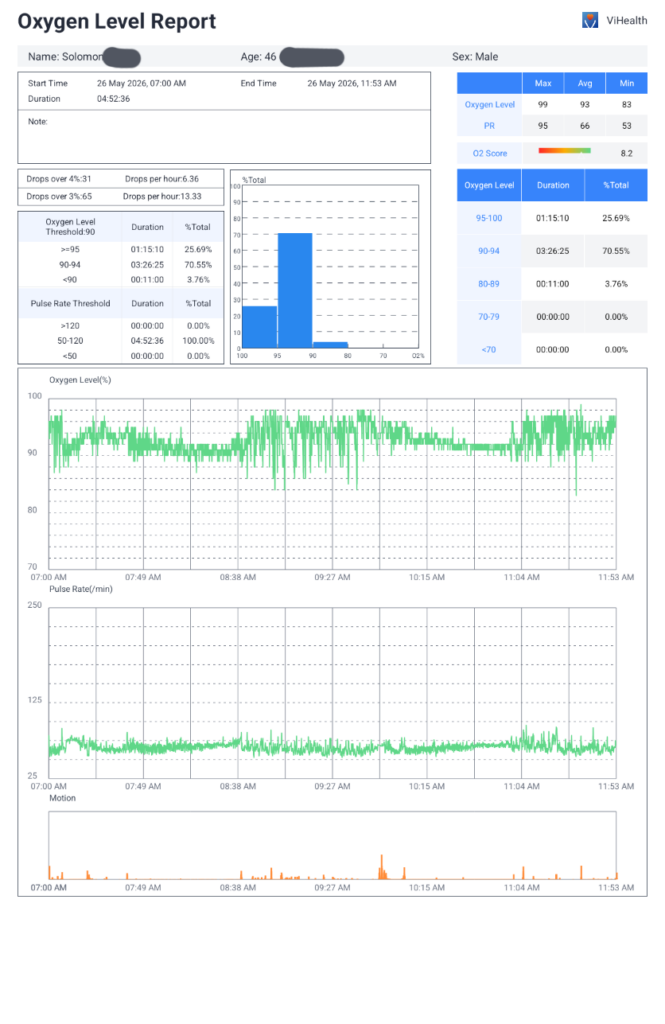
I still live with idiopathic central sleep apneas every single night, but I no longer have to fear as much slipping into a deep sleep and enduring prolonged, unmonitored hypoxia. The device is so foundational to my peace of mind that I have purchased a second backup unit, ensuring I am never left unprotected while the first one is recharging.
The Verdict The Wellue O2 Pulse Oximeter is a robust, reliable, and life-changing piece of consumer health technology. For the sleep disordered breathing community – especially those of us with complex or central apneas who cannot tolerate standard PAP therapy – this device provides the data, safety net, and autonomy we deserve. Even for those currently on PAP therapy – where the machines are sometimes not designed to give the patient actual data to see – the Wellue O2 Pulse Oximeter can act as that vital extra piece for sanity and double-assurance, actively checking the efficacy of the PAP device.
My Rating: 5/5
Understanding the Sleep Landscape The International Classification of Sleep Disorders (ICSD-3-TR) recognizes 7 core categories of sleep disorders. While my advocacy work on narcoplexic.com centers tightly around Category 3, my journey with the Wellue device highlights just how deeply these categories overlap in real patients. Roughly 1 in 5 people in the US live with a sleep disorder, yet only an estimated 18% are ever properly diagnosed. Bridging this enormous diagnostic gap requires better clinical recognition, but it also requires patients having access to reliable, continuous tracking tools like this one. Too often sleep disorders are shot down by doctors regardless of their specialty, including sleep doctors. There are so many comorbidities that are super common and even directly tied to sleep disorders, such as depression, ADHD, anxiety, and more. This is unfortunately part of where we’re at, and where the medical realm is currently at. Even though things are advancing in clinical science, there’s still a massive gap in the expertise and overall focus toward sleep reaching the mainstream. Eventually, sleep medicine must fully address the interconnections across very common psychological conditions, as well as many autoimmune and cardiovascular matters – recognizing that the entire body system is deeply connected and highly dynamic in nature. Ultimately, sleep medicine, the understanding of sleep disorders, and accessible consumer sleep tech must become much more deeply woven into general medical practice.
Disclaimer: I have no affiliation, sponsorship, or corporate connection with Wellue. This device was purchased independently out-of-pocket via Amazon. Always consult with a certified sleep specialist regarding changes to your respiratory care plan.
Sources & Verified Clinical References
1. **Diagnostic Classifications & The 7 Categories:**
American Academy of Sleep Medicine. (2023). *International Classification of Sleep Disorders, Third Edition, Text Revision (ICSD-3-TR)*. Darien, IL: American Academy of Sleep Medicine. Learn more at [aasm.org](https://aasm.org/).
2. **Sleep Disorder Prevalence (1 in 5 Americans):**
National Heart, Lung, and Blood Institute (NHLBI). (2022). *Sleep Disorders and Sleep Deprivation: An Unmet Public Health Problem*. National Institutes of Health. Grounded data available via [nih.gov](https://www.nhlbi.nih.gov/).
3. **The Diagnostic Care Gap (~18% Diagnosed):**
American Medical Association (AMA). (2024). *What Doctors Wish Patients Knew About Undiagnosed Sleep Apnea*. Clinical underdiagnosis rates tracked via [ama-assn.org](https://www.ama-assn.org/).
4. **Genetic Biomarkers in Type 1 Narcolepsy (HLA-DQB1*06:02):**
Mayo Clinic Laboratories. (2026). *Test Definition: NARC – Narcolepsy-Associated Antigen, HLA-DQB1 Typing, Blood*. Clinical utility and validation data for diagnostic screening reviewed via [mayocliniclabs.com](https://www.mayocliniclabs.com/).
5. **Pathophysiology of Central Sleep Apnea (CSA):**
Ho, M. L., & Brass, S. D. (2011). Obstructive and Central Sleep Apnea: Mechanisms and Clinical Management. *Neurology International*, 3(1), 15. Cross-verified via [ncbi.nlm.nih.gov](https://www.ncbi.nlm.nih.gov/pmc/articles/PMC3130364/).
Spanish version (coming soon)
Japanese/ソロモン・ブリッグスによる日本語訳 (coming soon)
Created by: Solomon Briggs
(aka Narcoplexic)
June 6th, 2026
Product Review: How the Wellue O2 Pulse Oximeter Became My Essential Sleep Biohack
© 2026 by Solomon Briggs is licensed under CC BY-NC-SA 4.0


To view a copy of this license, visit https://creativecommons.org/licenses/by-nc-sa/4.0/